

Australian Institute of International Affairs - Western Australia
Powered by
Past events
All events
Past events

Aug
28
2019
Past Event
Beyond Trump
The University Club of Western Australia
18:15 – 20:15
Join us with Professor Gordon Flake, Michael Wood, and Dr Sherry Sufi for a panel discussion on what US politics might look like beyond the administration of President Donald Trump.
Donald Trump's election campaign has been described as 'explosive, populist, and polarising, and his direct to market use of social media has been unprecedented. His election signified a powerful rejection of establishment consensuses on trade, immigration, and other issues. And while constraint on executive power was a key intention in the design of the US Constitution, it is hard to imagine that the presidency of Donald Trump will not leave some lasting impacts on the nature and practice of US politics.
Looking forward, we should also consider the trajectories of the trends that led to his election, as well as the evolving demographics and ethnic composition of American society, and the widening diversity of views within both major political parties.
Professor Gordon Flake, former State Director of DFAT Michael Wood, and Dr Sherry Sufi will share their particular insights into what US politics might look like beyond Trump and what it might mean for Australia’s relationship with the US.
*** Capacity at the venue is limited and door sales may not be available. Pre-purchase tickets early to avoid disappointment! ***
If you are unable to purchase tickets online, please call the Secretary on (08) 6225 2515 or email wa.branch@internationalaffairs.org.au to book a seat.
About the Speakers
Professor Gordon Flake is the founding CEO of the Perth USAsia Centre at The University of Western Australia.
Having built an internationally recognised profile over 25 years of think-tank expertise and leadership in Washington DC, Professor Flake relocated to Perth in 2014 to establish the Centre, and to build a broader world-class Indo-Pacific strategic community.
Prior to joining the Centre, he was the Executive Director of the Maureen and Mike Mansfield Foundation, a Senior Fellow and Associate Director of the Program on Conflict Resolution at The Atlantic Council of the United States and prior to that Director for Research and Academic Affairs at the Korea Economic Institute of America.
Professor Flake is one of Australia’s leading authorities on the Indo-Pacific, with a particular specialisation on Korea having spent nearly three decades focused on the Korean Peninsula and Northeast Asia Prof Flake has edited several volumes and authored numerous chapters on developments in the region.
Gordon holds a number of strategic leadership roles including currently serving on the United States Studies Centre Board and as Fellow of the College at St Catherine’s College at The University of Western Australia. He has previously served on the Board of the United States Committee of the Council for Security Cooperation in the Asia-Pacific (USCSCAP) as co-Vice Chair of the Board of the US Committee for Human Rights in North Korea, on the Advisory Council on the Korea Economic Institute of America, and on the International Advisory Board of the David M. Kennedy Centre at Brigham Young University.
He received his BA degree in Korean with a minor in international relations from Brigham Young University in Provo, Utah. He completed his MA at the David M. Kennedy Centre for International and Area Studies, also at BYU. He speaks both fluent Korean and Laotian.
Michael Wood is the Principal for Woodwork Consulting, involved with international relations and trade, investment, and government relations. He worked for the Department of Foreign Affairs and Trade from 1985 to 2018.
From 2015 to 2018, Michael was Australia's Consul-General to Chicago after being State Director of DFAT Western Australia from 2012 to 2015. From 1985 to 2009, his roles in DFAT included Deputy High Commissioner to Singapore, Director of International Economics and Finance, Director - Japan; First Secretary (Economic) - New Delhi, Consul (Economic) - Hong Kong, and First Secretary - New Delhi.
Michael has served as a Board Member & Chair of the Australian, New Zealand, American Chamber of Commerce in the US Midwest (2015 - 2018), as a Board Member of the University of Western Australia Oceans Institute (2012 -2015), and as a Board Member of the Asian Research Council - Murdoch University (2012 - 2015). From 2009 to 2012, Michael was also the Director of Short and Sweet, an Australian not for profit startup theatre festival company in India. In those three years it established annual festivals in New Delhi, Mumbai and Bangalore.
Mr Wood holds a Bachelor of Arts degree (Honours) from the University of Western Australia and a Graduate Diploma (International Finance) from the Australian Securities Institute. He speaks Spanish and French.
Dr Sherry Sufi is West Australian academic and columnist. He has two Masters degrees, in History and in International Relations, and a PhD in Language and Nationalism Studies for which he was awarded the Chancellor's Doctoral Research Medal. He currently serves as Chairman of the WA Liberal Party's Policy Committee and is a Member of the Advisory Committee for Federal Policy to the Prime Minister. Dr Sufi is active with various Jewish community organisations and well-known for his advocacy for a peaceful resolution to the Israeli-Palestinian conflict. He also organises regular study groups to tour Israel. He speaks, reads and writes four languages. Dr Sufi has made appearances on Sky News Australia and written articles for The Australian, The West Australian and Jerusalem Post.

Aug
22
2019
Past Event
Equal Partnership in Dignified Development: Solutions to Dysfunctional Relationships in the Pacific Island Countries
The University of Western Australia
17:30 – 19:30
The Australian Institute of International Affairs WA in partnership with the UWA Public Policy Institute presents this special event with international guest speaker Dr. Kaituu Funaki.
Reciprocity in Oceania is the cornerstone of all communities and failure to reciprocate results in loss of dignity or mana (spiritual authority).
In this lecture, Dr Kaituu Funaki, founder of the Dignified Pacific Initiative will argue that Official Development Assistance (ODA) to Pacific Island Countries (PICs) and the unbalanced ODA donor-recipient relationship has had the unintended consequence of a loss of dignity and feelings of inadequacy on the part of PICs. This has resulted in economic dependency and stagnation rather than independence and growth. He will assert that restoring balance by emphasising an equal ODA partnership and the way PICs can contribute to the global socio-economic system will lead to dignified development of PICs. This will reduce social issues caused by negative self-perception, improve sustainable use of resources, contribute to local and international security and promote harmony in the region.
Dr Kaituu will explore concepts of reciprocity and generosity in the context of Pacific development, with a particular focus on the strategic importance of Japan leading the way. Dr Funaki’s research has culminated in the development philosophy of Gross National Generosity, proposed as an alternative development framework that is rooted in the principles of reciprocity.
*** Capacity at the venue is limited and door sales may not be available. Pre-purchase tickets early to avoid disappointment! ***
Attendees are welcome to attend a post-lecture dinner at The University Club with Dr Kaituu in attendance. Bookings are not essential and can be made on the night.
If you are unable to purchase tickets online, please call the Secretary on (08) 6225 2515 or email wa.branch@internationalaffairs.org.au to book a seat.
About the speaker
Kaituu I Pangai Funaki holds an MBA (International Marketing and Business) and a PhD in Asia Pacific Studies
(Politics and International Relations) from Ritsumeikan Asia Pacific University (APU), Japan. He also has 10 years of professional experience in university administration and building international connections to Japanese higher education. Dr. Funaki was born and raised in the Kingdom of Tonga, worked as a banker, and has resided in Japan since 2000. His work focuses on Oceania and developing (recipient) countries with the goal of advancing dignity through the transformation of self-perceptions. His research proposed the new vision of Gross National Generosity (GNG), a sustainable development framework designed to articulate what ODA receiving countries could contribute to the SDGs from what they possess, and at the same time preserve these global resources for future generations. It is an alternative framework for assisting governments of developing countries to engage more resourcefully with international donors. He also established the Dignified Pacific Initiative (DPI - www.dignifiedpacific.com), with a mission of disseminating research findings and collaborating with like-minded individuals in various fields.
Jul
24
2019
Past Event
Rethinking Global Governance
The University Club of Western Australia
18:15 – 20:00
At our July event, AIIA Research Chair Professor Mark Beeson will provide an overview of the key issues and problems currently facing global governance and explain why international cooperation has become so difficult. Mark’s presentation will be a snapshot of his new book, Rethinking Global Governance.
The world currently faces a number of challenges that no single country can solve. Whether it is managing a crisis-prone global economy, maintaining peace and stability, or trying to do something about climate change, there are problems that need collective action on the part of states and other actors. Yet despite global governance seeming like a good idea, it's proving increasingly difficult to provide.
A limited number of copies of the book Rethinking Global Governance will be available for sale at a discounted price.
*** Capacity at the venue is limited and door sales may not be available. Pre-purchase tickets early to avoid disappointment! ***
If you are unable to purchase tickets online, please call the Secretary on (08) 6225 2515 or email wa.branch@internationalaffairs.org.au to book a seat.
About the Speaker
Professor Mark Beeson is the Discipline Chair of Political Science and International Relations at the University of Western Australia and the AIIA National Research Chair, appointed in February 2017. He is an editor of the AIIA publication, Australia in World Affairs, and has also been published in the Australian Journal of International Affairs (AJIA). He is coeditor of AJIA’s recently published Navigating the New International Disorder: Australia in World Affairs 2011-2015. He was the founding editor of Critical Studies of the Asia Pacific.
Before joining UWA, he taught at Murdoch, Griffith, Queensland, York (UK) and Birmingham, where he was also head of department. His key research interests are international relations; international political economy; Australian foreign policy; regionalism; politics, security and economics in the Asia-Pacific.

Jun
26
2019
Past Event
Poverty and Development: Theory vs Reality
The University Club of Western Australia
18:15 – 20:00
When questioning ‘what can Africa learn from South East Asian development?’, the response is usually summarised in just three words - export oriented industrialisation. However, by challenging this common answer, we find that this kind of insistence on the priority of export industrialisation is based on a mistaken interpretation of history.
Join us to explore the theories and realities of development with Dr Paul Schapper as he presents case studies from Indonesia, Malaysia, Vietnam, Nigeria and Tanzania. Paul will discuss developing country poverty mitigation and economic advancement with reference to theory, corruption, law and training. Evidence drawn from development and poverty mitigation successes lend support to alternative home-grown policy options that forget about exports and institutional development in favour of a focus on agriculture.
Through the course of the presentation, middle income countries of Latin America will also be examined showing that regulatory and training responses to high risk governance and corruption have blocked the professionalisation of management and caused conflicts in relation to public expenditure. Dr Schapper will consider the outlook for resolution of this issue, arguing that there will need to be difficult transition from procedural compliance to performance accountability in public sector administration.
*** Capacity at the venue is limited and door sales may not be available. Pre-purchase tickets early to avoid disappointment! ***
If you are unable to purchase tickets online, please call the Secretary on (08) 6225 2515 or email wa.branch@internationalaffairs.org.au to book a seat.
About the speaker:
Dr Paul Schapper PhD, BEc, BSc (Hons) is an international specialist in public sector governance and a Development Economist
for the World Bank. His career has spanned 35 years with 18 years in developing-country issues. He has worked in more than 50 countries including in Latin America, Eastern Europe, Africa, the Middle East, Central and South Asia.
Dr Schapper has lectured at the International Development Law Institute (Rome) and in management at the Australian National Government Executive Development Programme. He has particular interests in the potential roles of technology in economic development and mitigation of public sector corruption.
He is the former Professorial Fellow for Governance, Director-General for the Department of Industry and Technology, Commissioner for Supply, Chief Executive Officer for the Department of Contract and Management Services, Chief Executive for the Office of Public Sector Management and has a PhD in Management. Dr Schapper has also had extensive executive and board responsibilities and has published internationally on e-signature law and other aspects of acquisition management. He has been a peer reviewer for the World Bank and was involved in the recent reforms of the World Bank’s procurement policies and regulations and has undertaken numerous public administrative reviews. He was a founding member on the editorial board of the Journal of Digital Evidence.
Jun
04
2019
Past Event
David Irvine on Cyber Security and Cyber Conflict
The University of Western Australia
18:00 – 19:30
When the Wright brothers presented their airplane to the US Army it was first considered a means to observe and record what was taking place below. The idea that it could be used to alter what could be observed came later, eventually leading to the aerial bombing and destruction of entire cities in WW2. Likewise, the first concerns about cyber hacking were focused on unauthorised access to data to be copied and stolen.
We now know that altering data can destroy the machines that use it. The implications of altering data are increasing as activities in our physical world become more reliant on machines controlled by computer networks sharing data. Altering data now has potential to disrupt the way energy is generated and transmitted, how hazardous substances are processed and transported, how vehicular traffic is regulated, how illness is diagnosed and treated, and even how we vote.
Join us with Daivid Irvine to learn how Australian Security Services are dealing with these threats.
*** Capacity at the venue is limited and door sales may not be available. Pre-purchase tickets early to avoid disappointment! ***
Map to the venue can be found link this direct link: https://www.web.uwa.edu.au/contact/map?id=2383
If you are unable to purchase tickets online, please call the Secretary on (08) 6225 2515 or email wa.branch@internationalaffairs.org.au to book a seat.
About the speaker
David Irvine AO is an Australian diplomat who was head of the Australian Security Intelligence Organisation (ASIO) from 2009 to 2014. From 2003 to 2009 he was Director-General of the Australian Secret Intelligence Service and is currently Chair of the Foriegn Investment Review Board.
David was born in Perth, Western Australia and studied at Hale School and The University of Western Australia, graduating with honours in Elizabethan history. He worked as a journalist in Perth and joined the Department of External Affairs in 1970. From 1996 to 1999 David was the Australian High Commissioner to Papua New Guinea and was the Australian Ambassador to China from 2000 to 2003.
David has also written two books about Indonesia: a 1990 English translation of Bisma: Warrior Priest of the Mahabharata by Satyagraha Hurip, and Leather Gods & Wooden Heroes: Java's Classical Wayang about Indonesian Wayang shadow puppets.
May
29
2019
Past Event
YPN Event | International Trade: Emerging Developments and Prospective Outlook
The George
17:45 – 19:30
Join the AIIA Young Professionals Network and the Institute of Public Administration Australia to hear Chris McKay present a paper on International Trade: Emerging Developments and Prospective Outlook.
Chris is an experienced economist, a Senior Analyst in the Department of Treasury's revenue forecasting team and lead author of the paper. The paper considers recent developments in global trade, in particular the US trade policy under the Trump administration and the current US-China trade dispute. It also examines several scenarios of how the trade dispute and other developments might play out, including the mining revenue and economic implications for Western Australia, and the medium to long term trade environment for Western Australia.
View the full paper International Trade: Emerging Developments and Prospective Outlook paper here.
*** Capacity at the venue is limited and door sales may not be available. Pre-purchase tickets early to avoid disappointment! ***
If you are unable to purchase tickets online, please call the Secretary on (08) 6225 2515 or email wa.branch@internationalaffairs.org.au to book a seat.
May
22
2019
Past Event
Making a world of difference: grassroots international development from Perth to PNG
The University Club of Western Australia
18:15 – 20:00
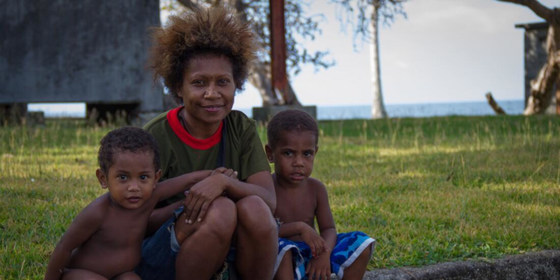
This month, learn more about the impact that Australian charities are having on the ground in less fortunate communities in our immediate neighbourhood as we hear from Perth-based midwife and Founding CEO of Living Child Inc. as one of the inaugural receipients of The Department of Foreign Affairs and Trade's new Australian Aid: Friendship Grant program.
Papua New Guinea is Australia’s closest neighbour, with the remarkably diverse, resource rich mainland less than four kilometres from our nearest populated island. Yet it in other ways, it's worlds apart as a largely remote population struggle with poverty and harsh living conditions. As something that many Australians may take for granted, maternal medical care is extremely poor, with little access to family planning, pregnancy and birth care and immunisation. Just across the Torres Strait, Papua New Guinean women suffer from some of the highest maternal mortality rates in the region, with five women dying every day due to complications during childbirth.
Sara will share her stories of bringing hope to families in the remote Keram River area of East Sepik Province through the work of Living Child Inc. Overcoming systemic corruption, societal male domination and lack of government and medical services, Sara will discuss the ways in which she has succeeded in negotiating cultural taboos and myths with sensitivity, to promote equitable, evidence based healthcare for better maternal and newborn outcomes.
*** Capacity at the venue is limited and door sales may not be available. Pre-purchase tickets early to avoid disappointment! ***
If you are unable to purchase tickets online, please call the Secretary on (08) 6225 2515 or email wa.branch@internationalaffairs.org.au to book a seat.
About the Speaker:
Sara David is a midwife passionate about global midwifery. Since 2011 she has been involved in preparing and facilitating evidence-based training to village birth attendants, health workers and midwives in developing nations. She is the founder and CEO of Living Child Inc, a charity aimed at reducing the maternal and newborn mortality rates in remote villages of Papua New Guinea. Sara now organises teams of midwives to provide support, simple teaching resources and professional development to local health workers and village volunteers.
In addition, Sara is closely aligned with Global Health Alliance Western Australia [GHAWA] which is facilitated by the WA Nursing and Midwifery Office to provide upskilling and professional development to midwives in developing countries. In 2014 she was contracted to write two Maternal & Newborn Care training packages for the GHAWA project in Tanzania which have been successfully implemented there. The program is now being launched in Papua New Guinea by Living Child Inc. thanks to the success of a DFAT Friendship Grant.
Apr
17
2019
Past Event
Australia-Indonesia Politics and Trade : Indonesian Election and IA-CEPA
The University Club of Western Australia
18:15 – 20:00
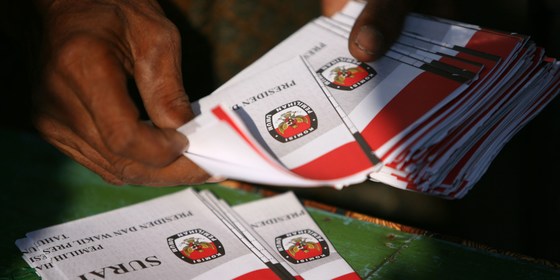
On 17 April 2019 up to 193 million eligible voters in Indonesia will head to the polls. For the first time in Indonesian history, the president, the vice president and members of the local and national legislatures will be elected on the same day. The two presidential candidates are current President Joko "Jokowi" Widodo and former Lieutenant-General Prabowo Subianto. The election will be a re-match of the 2014 presidential election, in which Widodo defeated Prabowo.
The new make-up of parliament will be of significant interest to Australia, as it will determine whether or not the recently signed Indonesia-Australia Comprehensive Economic Partnership Agreement (IA-CEPA) will be ratified by Indonesia and, if so, how long it may take to get through. If ratified the IA-CEPA is expected to help build economic prosperity throughout the region since most predictions have Indonesia on track to be the world's fifth-largest economy by 2030.
Join the panel discussion and hear from experts on what the presidential election and the IA-CEPA means for Australia.
*** Capacity at the venue is limited and door sales may not be available. Pre-purchase tickets early to avoid disappointment! ***
If you are unable to purchase tickets online, please call the Secretary on (08) 6225 2515 or email wa.branch@internationalaffairs.org.au to book a seat.
About the Panelists
Phil Turtle - National President, Australia Indonesia Business Council and Senior Consultant, Asialink Business
Phil has over 25 years’ experience in a broad range of industries, having spent his early career as an Engineer and Project Manager on a large number of resources projects in the region. He has a passion for Asian countries, having worked in China, Singapore, Malaysia and Indonesia. There he has been involved in project and business development in Mining, Energy, Education, Infrastructure, Tourism and other fields. He has served as a Board Member of the Australia Indonesia Business Council for the last 6 years, and is the current National President. Phil is also a Senior Consultant with Asialink Business, representing the organisation in Western Australia, in this role he assists Australian Businesses to equip themselves for doing business across Asia.
Associate Professor Hadrian Djajadikerta - Associate Dean (Research) and Associate Professor of Accounting, School of Business and Law at Edith Cowan University
Hadrian has a PhD in strategic management control, and he is also an industrial engineer and a chartered accountant. He has previously held academic positions at the University of New South Wales, Lincoln University, and the University of Technology Sydney. Hadrian is an active researcher and has successfully supervised more than a dozen PhD students to completion. He has also been a management consultant and corporate trainer in the US and Indonesia, and maintains strong networks and high-level engagement in Indonesia. Hadrian is also the Vice President of the Indonesia Institute, and the Founding Member and Vice President of the ASEAN Chamber of Commerce.
Ella S. Prihatini - Teaching Fellow, UWA School of Social Sciences
Ella S Prihatini is a teaching fellow at the UWA School of Social Sciences. She holds a BA in International Relations (University of Gadjah Mada, Yogyakarta) and a Master of Development Practice (University of Queensland, Brisbane). Her recently submitted thesis investigates women's parliamentary representation in Asia with Indonesia as a case study. Ella's research interests focus on gender and electoral politics, comparative studies, and the utilisation of social media in Indonesia. Her study at UWA is fully supported by the Endeavour Postgraduate Scholarship program (2015-2019). She has published her works in Women's Studies International Forum, Contemporary Politics, and Politics & Gender. She is also a regular contributor for The Converstation and SBS Radio Australia.
Mar
20
2019
Past Event
Asian Century... on a Knife edge
The University Club of Western Australia
18:15 – 20:00
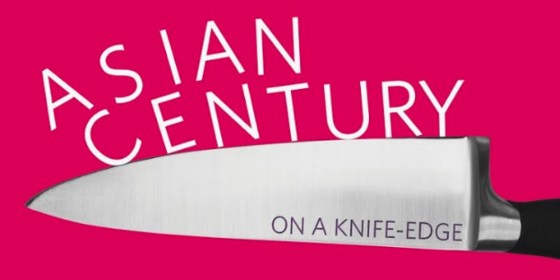
In his recent book, "Asian Century … on a Knife-edge," John West questions the conventional wisdom that the 21st century will belong to Asia. He argues that in recent years many observers have succumbed to a case of “Asian-Century hype.” In reality, Asia is suffering from stunted economic and social development. John identifies seven economic, social, political and geopolitical challenges for realising an Asian Century, but doubts that Asia’s leading economies have the political will to tackle these challenges. Further, he identifies numerous possible sources of economic, social, and political crisis.
Nevertheless, the Indo-Pacific of the 21st century is becoming increasingly dominated by Asia’s emerging giants - China, India and Indonesia - which have some of the world's largest economies. John argues that these countries are fragile superpowers whose power derives mainly from their enormous populations. Even by mid-century, they will still be well behind advanced countries like the US, Japan and Germany in terms of economic, business, and technological sophistication. But this has not stopped the rise of strategic competition between an increasingly distracted US and a growingly assertive China, despite the latter's domestic fragilities. Countries like Australia face great challenges in adapting to this new strategic environment.
John's book has received many reviews, including one by Professor Aurelia George Mulgan of the University of New South Wales, published by the Australian Institute of International Affairs in Australian Outlook.
*** Capacity at the venue is limited and door sales may not be available. Pre-purchase tickets early via the blue "GET TICKETS" button below to avoid disappointment! This event is being held at the University Club Case Study Room on level 1 ***
About the Speaker
John West has had a long career as an educator, journalist, researcher and policy-maker. He currently teaches Asia’s economic development at Sophia University. He is a contributing editor for FDI-Intelligence, a Financial Times magazine, and is also executive director of the Asian Century Institute. These current positions follow major stints at the Australian Treasury as director of balance of payments (1980–86), the OECD as head of public affairs and director of the OECD Forum (1986–2008) and at the Asian Development Bank Institute as senior consultant for capacity-building and training (2009–11).

Mar
14
2019
Past Event
Pop-up Event | Brexit: where next for the UK?
The University Club of Western Australia
18:15 – 20:00
The UK plans to leave the European Union on 29th March 2019, nearly three years after a referendum vote in June 2016. Negotiating Brexit has been a major preoccupation for the UK over the last two years. It has caused major political dislocation in the UK and divided the government, parliament, political parties, and the public.
The UK has been a participant in the European integration process since 1973 and over the last 45 years its politics, economy, society, and place in the world have been increasingly tied to Europe. Brexit is a major point of departure for the UK.
On the eve of the UK’s departure from the EU Professor Whitman will untangle the intricacies of the Brexit process, look at the state of play in the UK’s relationship with the EU, and offer an assessment of the UK’s future place in Europe.
*** Capacity at the venue is limited and door sales may not be available. Pre-purchase tickets early via the blue "GET TICKETS" button below to avoid disappointment! This event is being held at the University Club Case Study Room on level 1 ***
About the speaker
Professor Richard G. Whitman is Director of the Global Europe Centre and Professor of Politics and International Relations at the University of Kent. He is also an Associate Fellow and former Head of the Europe Programme at the Royal Institute of International Affairs (Chatham House).
His current research interests include Brexit and especially the future foreign and security and defence policies of the UK and the EU.
He is the author and editor of eleven books, published over sixty articles and book chapters, on European integration and UK foreign and security policy. He is a lead editor of the Journal of Common Market Studies (JCMS) – the longest established international academic journal covering the politics and economics of European integration. He was elected as an Academician of the UK Academy of Social Sciences in 2007 and is the 2017-2018 elected Chair of the British International Studies Association (BISA). He has also been appointed as an Academic Fellow of the European Policy Centre (EPC).
Professor Whitman is a regular international media commentator. Recent coverage has included BBC radio and television, Sky, ITV, CNN, Bloomberg, CNBC and he has been quoted by print publications including The Economist, The Financial Times, Newsweek, Reuters, the International Herald Tribune and the Wall Street Journal. He has regularly been called to give evidence to the UK Parliament on UK and EU foreign and security issues.
Feb
27
2019
Past Event
Geopolitics Vs International Relations: an African perspective
The University Club of Western Australia
18:15 – 20:00
EVENT FULLY SUBSCRIBED ONLINE. PLEASE CONTACT SECRETARY ON 0432 956 895 TO ENQUIRE ABOUT POSSIBLE DOOR SALES.
As a long time AIIA Western Australia member and supporter, we are delighted to welcome Dr Max de Vietri as our first speaker for the 2019 program to give consideration to the differences between geopolitics and international affairs.
The interaction of human groups on the surface of the earth has been the subject of long-time evaluation. In spite of claims to impartiality, writings on this can often be classed as propaganda or, at the very least, biased and prejudiced, upholding the rights and privileges of one group of people against another. Whether shrouded in terms of supposed 'objective' geopolitical terms or a more 'subjective' international relations relations speak, these writings shape the thoughts and actions of leaders, as well as our own.
The difference between ‘objective’ geopolitics and ‘subjective’ international relations is uncovered through the principal academic researchers and international government advisers that have historically helped shape these concepts. The dichotomy and the great weakness in our own thinking about global matters is exposed by examining the writings of these researchers and practitioners.
Max will explore this in the context of the recent elections in resource-rich Democratic Republic of the Congo (DRC), a country that is one of the largest copper producer in the world and contains some 80% of world global reserves in cobalt - both commodities becoming increasingly important in our quest for environmentally safe power. What is the outlook for mining companies, including many from Australia, who have their eyes on this resource along with potential gold and copper deposits? And what are the expected social and political impacts of future natural resource projects on West African states and peoples?
Case Study Room, Level 1, UWA Club (next to the Auditorium).
Doors open from 6.15pm. Enjoy a complimentary house beverage on arrival. Presentation commences 6.45pm.
Optional a la carte dinner available from the Level 1 UWA Club Bar & Restaurant following the presentation. No bookings required. Individual orders and payments taken by restaurant staff on the night.
*** Capacity at the venue is limited and door sales may not be available. Pre-purchase tickets early via the blue "GET TICKETS" button below to avoid disappointment! ***
About the speaker
Dr Max de Vietri is the Principal of African Geopolitics, a socio-political advisory group that helps African governments and foreign companies in the natural resources industries work together on the African continent. A graduate geologist with 43 years of international experience in mining and petroleum exploration and production in over 50 countries, including 26 in Africa, Max has been involved in finding and championing the evaluation of significant hydrocarbon and mineral discoveries. Raised in France before migrating to Australia, his native language skills have been beneficial for working in many French speaking African locations, starting with Burkina Faso as early as 1978.
Max is an “Officer of the National Order of Merit for the Islamic Republic of Mauritania”, an award granted by then-President Ely Mohamed Vall in 2005 in recognition of his efforts in promoting the mining and petroleum potential of Mauritania. In addition to Max's graduate degree in geology (1975), he has a Graduate Diploma in Business (1986), a Master in International Relations (2010), and doctorate in International Affairs (2015), evaluating the interaction of the establishment of a petroleum industry with the socio-political environment of Mauritania.
His experience serving as Consul for the Republic of Mali in Perth between 2005 and 2016, led to the establishment of African Geopolitics in 2012, aimed at assisting in the development of economic projects for the benefit of commercial ventures, African governments, and local people. Max's postgraduate research studies in international affairs began in 2008, reinforcing his interest in the social and political impacts of natural resource projects on emerging countries, and especially West African states.
Important format changes in 2019:
Change of day - regular AIIA monthly events will now be held on Wednesdays. Save the dates in your diary for the rest of 2019 - 20th March, 17th April, 22nd May, 26th June, 24th July, 28th August, 25th September, 23rd October, 27th November, 11th December (Christmas format).
Change of room - regular AIIA monthly events will now be held in the UWA Club Case Study Room located on level 1, next to the Auditorium.
Capacity limitations - the Case Study Room has a strict capacity limit which may prevent door sales depending on the event. Secure your place by purchasing tickets online in advance.
Optional dinner post-presentation - members and guests are invited for dinner with the speaker following the presentation (subject to speaker availability). This will be held in the UWA Club Bar & Restaurant (same level of the Case Study Room) off the a la carte menu. No pre-bookings required. Individual orders and payments will be taken by restaurant staff. EFTPOS and separate billing available.

Feb
22
2019
Past Event
Japan and Australia: economic cooperation in the Indo-Pacific
Beaumonde On The Point
14:00 – 17:00
This event has sold-out
The Consulate-General of Japan in Perth, in partnership with the Australian Institute of International Affairs (AIIA), invites you to Japan and Australia: economic cooperation in the Indo-Pacific.
This special Friday afternoon symposium overlooking the Swan River in East Perth will feature a keynote presentation by visiting high-profile Japanese Government official, Professor Tomohiko Taniguchi, Special Advisor to the Cabinet of Prime Minister Shinzo Abe.
A panel discussion will follow with expert commentary from:
Sam Walsh AO - Director, Mitsui & Co (former CEO, Rio Tinto)
Fiona Simson - President, National Farmers Federation
Prof. Mark Beeson - Professor of International Politics, University of Western Australia
Over the course of the afternoon understand more about the international geo-strategic environment, areas for greater economic cooperation in specific sectors between Australia and Japan, and the future economic opportunities presented by the Comprehensive and Progressive Trans-Pacific Partnership (CPTPP) and the Japan Australia Economic Partnership Agreement (JAEPA).
Doors open at 1:30pm for a 2:00pm start. Afternoon tea will be provided.
This is a no cost event, but capacity is strictly limited - register early to avoid disappointment!
For more information on this event, contact the AIIA National Office on (02) 6282 2133 or info@internationalaffairs.org.au.
About the Speakers
Dr Tomohiko Taniguchi is Professor at Keio University Graduate School of System Design and Management (SDM). He is also Special Adviser to Prime Minister Shinzō Abe's Cabinet.
Between February 2013 and March 2014 he was Councillor at the Prime Minister's Office. Then, and now, his responsibilities have included writing foreign-policy speeches for PM Abe.
After spending 20 years with Nikkei Business, a weekly magazine, he joined the Ministry of Foreign Affairs in 2005 as Deputy Press Secretary and Deputy Director General for Public Diplomacy. Until he left the ministry three years later he addressed the English speaking press and wrote speeches for then Foreign Minister Tarō Asō and other leaders including then PM Shinzō Abe.
He has authored or co-authored more than 10 books on international affairs. His latest book, published 31 July 2018 entitled (English translation) "Truth be Told of Shinzō Abe" was his own account of Abe's prime ministership. He has appeared live more than 250 times on BBC, Al-Jazeera English, CNN, CNA, etc.
Sam Walsh is a Non-Executive Director of Mitsui & Co (Japan), and Chair of Gold Corporation (Australia), the Perth Mint, the Accenture Global Mining Council (UK), the Australian Council for the Arts, the Perth Diocesan Trust, and the Royal Flying Doctor Service (WA Ops). Sam was Rio Tinto plc & Ltd chief executive, from January 2013 to July 2016, when he retired after a 25-year career with the international mining group.
Sam started his career in the automotive industry, working for 20 years in senior leadership roles with General Motors and Nissan Australia. He has been awarded Graduate of Distinction, Life Time Achievement Award University of Melbourne, Honorary Fellowship Melbourne Business School, AusIMM Institute Medal and is a former Visiting Fellow at Oxford University.
Fiona Simson is the President of the National Farmers’ Federation and is the first woman to hold the post. A mixed farmer and grazier with tertiary qualifications in business and education, Fiona’s passion for local food production and the growth and sustainability of rural and regional Australia has led to her current career in agricultural advocacy and as a non-Executive Director. She also sits on the Board of the NRMA (NSW), the Australian Made Campaign Ltd, AgStewardship Australia, the Australian Farmers Fighting Fund and SproutX.
Pofessor Mark Beeson is Professor of International Politics at the University of Western Australia. Before joining UWA, he taught at Murdoch, Griffith, Queensland, York (UK) and Birmingham, where he was also head of department. His work is centred on the politics, economics and security of the broadly conceived Asia-Pacific region. Mark is a commissioning editor of the AIIA’s online publication, Australian Outlook, and is the founding editor of Critical Studies of the Asia Pacific.
