

Australian Institute of International Affairs - Western Australia
Powered by
Past events
All events
Past events
May
27
2020
Past Event
COVID-19 in Sub-Saharan Africa: The Political, Economic, and Socio-cultural Implications
18:30 – 19:45
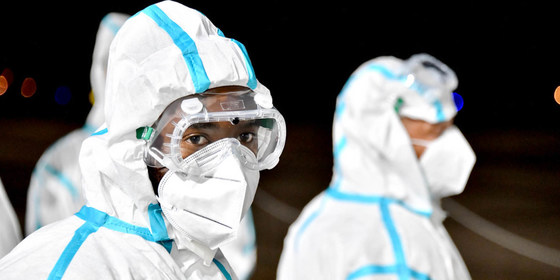
In recent weeks, predictions over the scale of the COVID-19 epidemic in Africa have ranged from catastrophic to cautiously optimistic.
At this stage, we don’t know what the course of the African epidemic will be. But we do know that it has already produced a wide range of political, economic, and socio-cultural effects. It has provided an opportunity for autocratic governments across the continent to strengthen their grip on power and generated an economic and financial crisis at least as serious as that of the 1970s.
While it has adversely effected ordinary Africans’ everyday lives, it has also highlighted the extraordinary resilience of African societies in the face of epidemics and other disasters, as well as their ability to adapt in the face of such adversities. This talk is based upon primary ethnographic research on COVID-19 that is being conducted across Uganda and East Africa in real time, using virtual methods. It will provide new insights into the challenges that COVID-19 is posing for ordinary Africans, and the strategies they are pursuing in response to them.
*** Pre-registration essential.
This presentation will be held as an online webinar using Zoom. A link to the webinar will be sent directly to those who have registered in advance of the webinar. ***
Please note that this webinar is being held in Western Australia. The presentation will run from 6:45pm to 7:45pm AWST (UTC+8). Access to the Zoom webinar will open at 6:30pm AWST (UTC+8).
If you have any questions or difficulty registering online, please call the Secretary on 0406 713 295 or email wa.branch@internationalaffairs.org.au.
About the speaker:
Richard Vokes is Associate Professor of Anthropology and Development at the University of Western Australia.
His research focuses primarily on Uganda and the African Great Lakes region, where he has been conducting ethnographic and archival research since 2000. His first book, Ghosts of Kanungu: Fertility, Secrecy and Exchange in East Africa (2009), was a social history of the HIV/AIDS epidemic in one of worst effected parts of the continent. He has since gone on to write more extensively about HIV/AIDS, and about other epidemics he has worked on, and lived through, in Uganda – including outbreaks of Measles, Nodding Syndrome and Ebola.
Apr
22
2020
Past Event
The politics of pandemics: COVID19 and the international order
18:30 – 19:45
Please note that registrations have now closed for this event
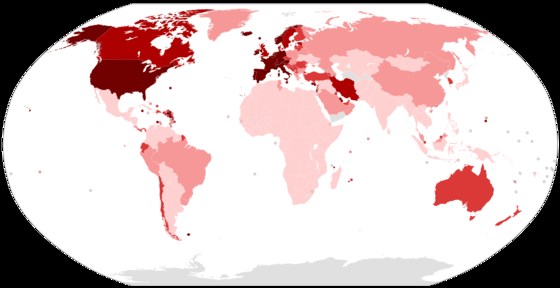
The rapid spread of the coronavirus COVID19 is bringing about an equally rapid transformation in domestic and international politics.
The preparedness of national health systems and the responses of political leaders around the world are being thrown into sharp and often unflattering relief.
The absence of leadership from United States at either the domestic or especially the international level is especially noteworthy. China's response, by contrast, has - after a false start - been remarkably effective. This presentation considers what the crisis may mean for the relative standing of American and Chinese forms of politics and economics. Are democracies capable of responding to the challenge? What are the implications for free market capitalism as it succumbs to yet another crisis? We may not know the answers for a while, but the questions are increasingly urgent.
*** Pre-register tickets early.
This meeting will be held as an Online Webinar using Zoom. A link to the meeting will be sent directly to those who have registered. ***
Please note that this event is being held in Western Australia and will run from 6:45pm to 7:45pm AWST (UTC+8). Zoom webinar will open at 6:30pm AWST (UTC+8).
If you have any questions please call the Secretary on 0406 713 295 or email wa.branch@internationalaffairs.org.au to book a seat.
About the speaker:
Mark Beeson is Professor of International Politics at the University of Western Australia and the AIIA National Research Chair. He is co-editor of AJIA’s flagship publication, Navigating the New International Disorder: Australia in World Affairs 2011-2015. He was the founding editor of Critical Studies of the Asia Pacific.
Before joining UWA, he taught at Murdoch, Griffith, Queensland, York (UK) and Birmingham, where he was also head of department. He has also had visiting positions in the UK, Austria, France, Germany, Russia, China and Hong Kong. His key research interests are international relations; international political economy; Australian foreign policy; regionalism; politics, security and economics in the Asia-Pacific.
Mar
19
2020
Past Event
THIS EVENT HAS BEEN CANCELLED | How the West Undermined Women’s Rights in the Arab World
32 St Georges Terrace
18:00 – 20:00
Based on personal narratives of women activists of different generations in Egypt, Lebanon and Jordan, this lecture explores the history of women’s activism in the Arab world from the 1950s onwards.
Nicola Pratt will help demonstrate the ways in which this activism has changed over time and what this tells us about the gendered dimensions of geopolitics in the Middle East. Highlighting the significance of women’s activism and women’s rights within radical political projects that resisted Western imperialism, from the 1950s until the 1970s, and the gendered consequences of the defeat of radical popular movements by the West and its local allies. This lecture argues that the demise of radical, secular movements has led to a decoupling of secular women’s rights agendas from local popular projects. Paving the way for their co-option and instrumentalization by authoritarian regimes and international actors, thereby undermining the credibility of secular women’s rights agendas.
This lecture will be held at the Murdoch University City Campus from 6:30pm to 8:00pm (doors open from 6:00pm)
*** Capacity at the venue is limited and door sales may not be available. Pre-purchase tickets early to avoid disappointment!
This event is being held at the new Murdoch University City Campus found on Level 9 of Golden Square, 32 St Georges Terrace. A map to this location can be found here ***
If you are unable to purchase tickets online, please call our Secretary on (08) 6225 2515 or email wa.branch@internationalaffairs.org.au to book a seat.
About the speaker:
Nicola Pratt is a Reader in the Politics and International Studies Department at the University of Warwick, UK. Nicola teaches and researches on the international politics of the Middle East, with a particular interest in feminist approaches as well as ‘politics from below.’ Her work has appeared in International Studies Quarterly, Third World Quarterly and Review of International Studies, amongst others. She has written and co-edited a number of books on women, gender and the Middle East, including, most recently, Rethinking Gender in Revolutions and Resistance: Lessons from the Arab World (2015, co-edited with Maha El Said and Lena Meari). Her forthcoming monograph is entitled, Embodying Geopolitics: Women’s Activism in Egypt, Jordan and Lebanon from National Independence until the Arab Uprisings. She is also Vice President of the British Society for Middle Eastern Studies.
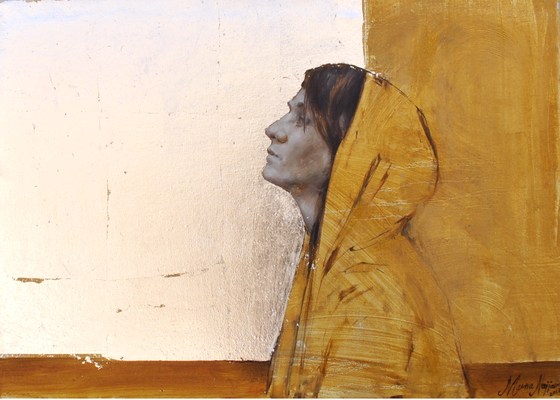
Event image: 'Silver Sky' (2014) by artist Marwa Alnajjar.
This event is being held in proud partnership with Murdoch University:
Feb
26
2020
Past Event
Back from the Barracks: Why Indonesia's Military Still Reigns Supreme
The University Club of Western Australia
18:15 – 20:00
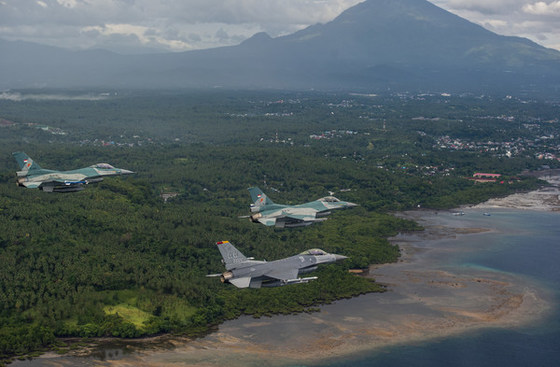
This presentation will take a socio-cultural look at why Indonesia wants, and might need, a politically active military. For twenty years, democracy in Indonesia saw the formal exit of the military from politics, the end of its independent business interests, and its nominal return to barracks. Despite those developments, and the need for further reform and professionalisation, it appears that under President Joko Widodo, the Indonesian military is again becoming influential in politics, society, and economics. Jokowi has surrounded himself with former army generals as key cabinet ministers, power brokers, and close advisors.
What explains the enduring role and influence of the armed forces in contemporary Indonesia? What is the impact of current civil-military relations on Jokowi's second term agenda, particularly on maritime security? With an imbalance of power and unresolved issues from the past, how can Indonesia make the most of its military's capacity and influence in the face of pressing traditional and non traditional security issues?
*** Capacity at the venue is limited and door sales may not be available. Pre-purchase tickets early to avoid disappointment!
This event is being held at the University Club of Western Australia, Seminar Room 1 on the Ground Floor ***
If you are unable to purchase tickets online, please call the Secretary on (08) 6225 2515 or email wa.branch@internationalaffairs.org.au to book a seat.
About the speaker:
Natalie Sambhi is Founder and Executive Director of Verve Research, an independent research collective focussed on the relationship between militaries and societies. Since 2016, she has also been a Research Fellow at the Perth USAsia Centre. Natalie is a PhD scholar at the Strategic and Defence Studies Centre, the Australian National University, focussing on Indonesian military history. In 2018, the Royal United Services Institute awarded her the Leo Mahony bursary to support her doctoral research.
From 2012 to 2016, Natalie worked at the Australian Strategic Policy Institute (ASPI) as an Analyst and Managing Editor of ASPI’s blog, The Strategist. She has previously worked at the Department of Defence, University of Canberra and for the academic journal Asian-Pacific Economic Literature. In May 2014 and in January 2016, Natalie was a Visiting Fellow at the Center for a New American Security (CNAS) in Washington, DC. She holds a Bachelor of Arts (Asian Studies) (Hons) from the University of Western Australia and a Master of Arts (International Relations) and Master of Diplomacy from the Australian National University.
Natalie has been a guest lecturer and presenter at the Australian National University, Australian National Security College, Australian War College, Indonesian National Resilience Institute (LEMHANNAS), Indonesian Defense University, Indonesian Ministry of Foreign Affairs, Canadian Department of National Defence and several international think tanks and universities. Her writing has appeared in Security Challenges journal, South China Morning Post, War On The Rocks, The Diplomat, The Interpreter and The National Interest.
Natalie has previously been involved with the Australian Institute of International Affairs ACT; the US-based Center for International Maritime Security (CIMSEC) and was a founding member of the Women in Defence and Security Network (WDSN).
Dec
11
2019
Past Event
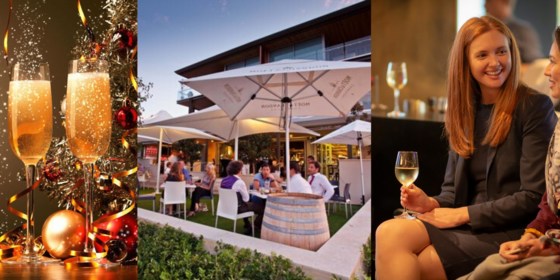
AIIA WA Christmas Party 2019
30 The Avenue, Nedlands
18:00 – 20:00
Due to speaker unavailability for our Christmas event, our end of year celebration will take on a more casual format with a festive drop-in drink at Steve’s Bar & Café in Nedlands instead.
Come along to jingle and mingle with us!
Join us in the outdoor area of the institution that is Steves to celebrate the year that’s been and get to know your AIIA WA Committee, fellow members and guests. There will be casual mingling and obligation-free games for those wanting to partake, but no guest speaker at this event.
Time: Drop by anytime between 6-8pm
Date: Wednesday 11 December 2019
Venue: Outdoor area at Steves, 30 The Avenue, Nedlands
Parking: Patron parking available off Broadway & The Avenue, or free street parking after 5pm (please check signs)
Price: Free entry and complimentary arrival drink for financial members. Cash bar thereafter. Guests welcome!
RSVP: Being a casual drop-in event, there is no need to RSVP.
***Please note the change of venue. There will be no speaker event at the UWA Club on 11 December as previously advertised.***
Annual Book Swap:
For those wanting to partake in the annual book swap tradition, please bring a book wrapped as a
Christmas surprise for another participant.
Don’t forget to take another book from the pile when leaving for the night for some summer reading!
Dec
04
2019
Past Event
Chinese Scholars Delegation Roundtable
The University of Western Australia
11:00 – 12:30
The Australian Institute of International Affairs for WA Inc., in partnership with the Centre for Muslim States and Societies, UWA, invite you to an intimate roundtable discussion with a distinguished delegation of visiting Chinese scholars led by HE Ambassador Mr Qi Zhenhong, President of China Institute of International Studies (CIIS).
As a Sister Institute to the Australian Institute of International Affairs, CIIS is the think tank of China's Ministry of Foreign Affairs and conducts research and analysis on a wide range of foreign policy issues of strategic importance, particularly those concerning international politics and world economy.
CIIS consists of nearly one hundred researchers and other professionals. Among them are senior diplomats, leading area-study specialists, and preeminent experts in major fields of foreign affairs. Even young scholars at CIIS all have advanced university degrees in International Relations or related disciplines.
This roundtable is part of a second-track scholarly exchange. AIIA and CMSS, UWA encourage those engaged in government, business, acedemia or study with our largest trading partner and Asian-Pacific neighbour to join the session.
***This event is FREE, but registration is essential.***
If you are unable to book your free ticket online using the GET TICKETS button, please call AIIA WA Secretary on (08) 6225 2515 or email wa.branch@internationalaffairs.org.au to register.
The roundtable will be held at the University of Western Australia in the Economics and Commerce Conference Room 3.73 (next to Perth USAsia Centre), Level 3, Old Economics Building. Parking is available on a pay and display basis along Hackett Drive or in designated parking bays in UWA Carpark #3 (immediately adjacent the UWA Club).
Tea and coffee will be provided.
____________________________________________________________________________________________________
ABOUT THE VISITING DELEGATION:
Amb. Qi Zhenhong
Amb. Qi Zhenhong is President of China Institute of International Studies (CIIS). Once worked as Counselor, Deputy Director-General, Policy Planning Department, MFA; Deputy Director-General, General Office, MFA; Ambassador Extraordinary and Plenipotentiary of the People's Republic of China to the Kingdom of Bahrain.
Dr LIU Qing
Dr Liu Qing is a senior researcher, Director of the Department for Asia and the Pacific Studies at China Institute of International Studies (CIIS), council member of China International Culture Exchange, Secretary-General of Global Centre for Mekong Studies. He enjoys the special allowance granted by the State Council of the People’s Republic of China. He was Director of the Department for American Studies. Mr Liu served at Chinese Embassy in Australia as First Secretary from 2012-2015. His research covers the U.S., Asia and the Pacific, regional integration, etc. He chaired a couple of programs related to the US, East Asia and regional cooperation. He has written extensively on various aspects of the US foreign policy in Asia and East Asia cooperation. He received his master and doctorate degree from Renmin University of China, and bachelor degree from Hunan University of Science and Technology. Dr Liu was a visiting scholar at the University of South California, USA
Dr Liu Feitao
Dr Liu Feitao is an associate research fellow, graduated in 2006 with PhD Degree in international politics from Renmin University and became a member of the Department for American studies at CIIS the same year. He worked as the deputy director of the Department for American Studies from 2010-2016. In 2012, he went to The Center for International Security and Cooperation (CISAC) at Stanford University to work as visiting fellow on issues of Korean Peninsular. From July 2016 to the end of 2018, he was an outposted diplomat in the policy division of the China Embassy in Australia and currently he is back to his researching post in the Department for American Studies. He has been studying Sino-US relations with focuses on diplomatic, security and strategic issues.
In proud partnership with the:
Nov
27
2019
Past Event
Crisis in Yemen
The University Club of Western Australia
18:15 – 20:00
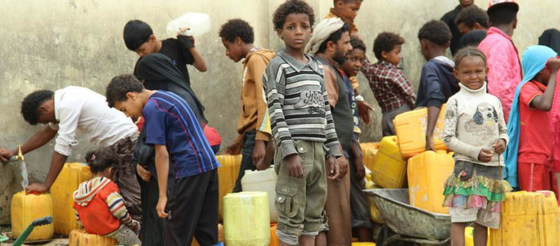
The war in Yemen has been raging for more than 4 years with catastrophic outcomes for its people. Out of a population of 28 million, 24 million are in need of humanitarian assistance. Fifteen million of them are on the brink of famine. Vital infrastructure in Yemen has been destroyed and its people are suffering the worst outbreak of cholera in history. This is the world’s largest humanitarian disaster, yet there is hardly any international news coverage.
Melissa Parke is a member of the UN Group of Eminent Experts on Yemen. At our November meeting, Melissa will talk about how what began as a civil war, has broadened into a regional conflict involving powerful states. She will discuss the parties involved and their responsibility for human rights violations according to the UN Human Rights Council, as well as the responsibility of states that are supplying weapons and other assistance to parties to the conflict.
*** Capacity at the venue is limited and door sales may not be available. Pre-purchase tickets early to avoid disappointment!
This event is being held at the University Club Case Study Room on level 1 ***
If you are unable to purchase tickets online, please call the Secretary on (08) 6225 2515 or email wa.branch@internationalaffairs.org.au to book a seat.
About the speaker:
The Hon Melissa Parke is the former federal member for Fremantle and a former Minister for International Development. Before entering parliament, Melissa worked as a senior lawyer in the United Nations for 8 years, serving in Kosovo, Gaza, New York and Lebanon.Prior to that Melissa practiced law in Sydney and Western Australia, in private practice and in a regional community legal centre.
Melissa is an Ambassador for ICAN, the International Campaign to Abolish Nuclear Weapons. In December 2017 Melissa was appointed by the UN High Commissioner for Human Rights as an Eminent Expert to investigate human rights violations in Yemen. She was re-appointed to this role in October 2018.
Nov
14
2019
Past Event
A Conversation with the Norwegian Ambassador to Australia, HE Paul Gulleik Larsen
235 St Georges Terrace
11:45 – 13:00
The Australian Institute of International Affairs for WA, Inc. in partnership with the Norwegian Australian Chamber of Commerce and KPMG, invites you to this special lunch event in the Perth CBD.
Geography is destiny, but good governance is decisive for nation-states seeking security and prosperity in a challenging world. During 100 years of independence, Norway has engaged in international diplomacy to promote national interests through multilateral co-operation and rules-based relations with other states, large and small. As a small-to-medium-sized power bordering Russia in the north of Europe, Norway has gained experiences which are relevant for other states in a similar situation.
Australia and Norway have historically been likeminded partners, sharing common interests in war and peace, trade and development, including in the United Nations and World Trade Organiation. In an increasingly complex and changing global environment, Australia and Norway are also becoming more strategic partners, through security and business co-operation, as well as in sustainable development. This includes defence, oil and energy industry, much of which is concentrated in Perth, as well as international regimes for the oceans and the Antarctic. With a changing climate and the rise of China among the factors presenting new challenges for foreign policy, the partnership between Norway and Australia has the potential for further development.
*** Capacity at the venue is very limited and door sales may not be available. Pre-purchase tickets early to avoid disappointment! ***
Light lunch provided.
If you are unable to purchase tickets online, please call the Secretary on (08) 6225 2515 or email wa.branch@internationalaffairs.org.au to book a seat.
About the speaker:
Ambassador Paul Gulleik Larsen is a career diplomat with 27 years of international experience, including Norwegian MFA postings in Belgrade (as Chargé d’affaires 1991-1994), in New York (as Counsellor for Norway in the UN Security Council 2001-2002), and in Moscow (as Deputy Head of Mission 2002-2007).
Outside the MFA, Paul has served as diplomatic advisor in the Office of the Prime Minister of Norway in 1998-1999, and as Chief of Staff and Director at the UN World Food Program (WFP) in Rome 2007-2013. While at WFP, Paul sat in the Strategic Leadership Group and represented WFP in G8, G20 and UN inter-agency bodies. After returning to MFA in Oslo in 2013, Paul served in the UN Department as Project Director for policy and coordination of Agenda 2030/SDG and as Special Envoy for Security Council Affairs, responsible for strategy and policy for preparing Norway’s membership of the UN Security Council in 2021-22.
As Ambassador of Norway in Canberra from September 2018, Paul is responsible for Australia, New Zealand, Papua New Guinea, Fiji, Solomon Islands, Vanuatu, Tonga, Samoa, Kiribati, Nauru, Tuvalu and Cook Islands.
Paul has a Master of Science degree from the London School of Economics and a B.A. from the University of Oslo. He received the French Ordre du Mérite Agricole during the French G20 presidency in 2011. Paul is fluent in English, manages in French, and understands Spanish and German.
This event is proudly in partnership with:
Oct
23
2019
Past Event
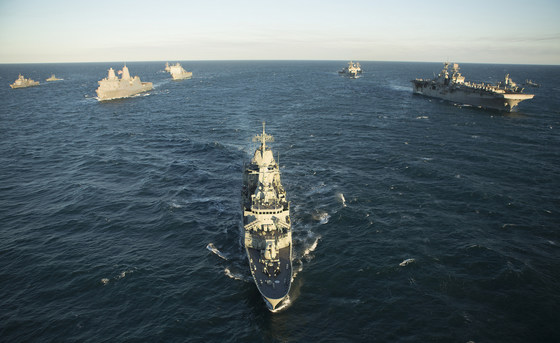
Defending the Maritime Rules-Based Order: Perspectives from the Indo-Pacific
The University Club of Western Australia
18:15 – 20:00
Maritime disputes are multifaceted. They include overlapping claims of sovereignty and jurisdiction, contests over freedom of navigation, island-building and militarization, and the use of ‘grey zone’ tactics to harass, intimidate and advance strategic interests. Maritime disputes have become highly visible microcosms of broader discord between the US-led regional security order, and challenger conceptions of order that see a bigger role for rising powers in generating new rules and alternative interpretations of existing international law.
The 2019 US Indo-Pacific strategy report outlined expectations that US allies and partners would contribute to a regional ‘rules-based order’ and share US responsibilities for defending the region against common threats in maritime domains. But it is not clear that the US and its allies and partners have the same understanding of maritime order or the rules that support it. This presentation will compare and contrast the maritime security interests of key Indo-Pacific states and their attitudes to maritime rules, and reflect on the potential implications for regional maritime order building.
*** Capacity at the venue is limited and door sales may not be available. Pre-purchase tickets early to avoid disappointment!
This event is being held at the University Club Case Study Room on level 1 ***
If you are unable to purchase tickets online, please call the Secretary on (08) 6225 2515 or email wa.branch@internationalaffairs.org.au to book a seat.
About the speaker:
Dr Bec Strating is a Senior Lecturer in Politics and International Relations in the Department of Politics, Media and Philosophy at La Trobe University, Melbourne. Bec’s current research focuses on maritime disputes in the Indo-Pacific, Law of the Sea and Australian foreign policy. She received her PhD in politics from Monash University in 2013 and has produced two monographs and numerous scholarly publications. Bec is currently an Asian Studies Visiting Fellow at East West Center in Washington DC, and a non-resident fellow at Georgetown University, Washington DC, and Perth US-Asia Centre. In 2018, her article on the Timor Sea maritime dispute was awarded the Boyer Prize for best article published in the Australian Journal of International Affairs in 2017. Bec regularly contributes to debates about politics and foreign policy in media and policy forums, is a commissioning editor of Australian Outlook and has testified in Australian federal parliament as an expert witness.

Oct
09
2019
Past Event
Brazil Ablaze: Understanding the Amazon Rainforest Fires
The University of Western Australia
17:30 – 19:30
President Jair Bolsonaro has been deemed by many to be the “Trump of the Tropics”. Since his election last October, there have been significant changes in Brazil’s environmental policies and an increase in international posturing regarding the deforestation of the Amazon rainforest.
Brazil, however, is not the United States. It is a state with deep roots in political authoritarianism with a history that includes 21 years of military dictatorship. Far-right populism and the resurgence of political authoritarianism are again a growing threat to Brazilian democracy and freedom. The incumbent administration is unashamedly rolling back Brazil’s environmental laws and indigenous protections, and has discredited emerging data from Brazil’s Space Agency (INPE) on the deforestation of the Amazon rainforests.
Satellite imagery from the INPE show wildfires sweeping through the Amazon, and confirm fears of illegal logging, encroaching crop and livestock farming, gold mining, and illegal occupations of indigenous reserves. Many questions have arisen regarding the administration’s handling of the Amazon fires. Foremost: Could they have been prevented?
This presentation will explore President Bolsonaro’s posturing regarding environmental laws, indigenous rights, and climate change in relation to the severity of the forest fires burning in the Amazon now. The presentation will conclude with remarks on the possible way forward for Brazil’s environmental safeguards and the fight against climate change.
*** Capacity at the venue is limited and door sales may not be available. Pre-purchase tickets early to avoid disappointment!
This event is being held at the University of Western Australia in the Old Economics Conference Room ***
Map to the venue can be found link this direct link: https://www.web.uwa.edu.au/contact/map?id=2383
If you are unable to purchase tickets online, please call the Secretary on (08) 6225 2515 or email wa.branch@internationalaffairs.org.au to book a seat.
About the speaker:
Flavia Bellieni Zimmermann is a Teaching Fellow and a Doctoral Candidate at the University of Western Australia School of Social Science, Political Science and International Relations. Flavia is the Department Representative and the Seminar Series Coordinator for Political Science and International Relations at the University of Western Australia. She holds a Graduate Diploma of International Relations and Security Studies from Curtin University in Western Australia, and a Bachelor of Laws with first class honours from the Pontifical Catholic University from Rio de Janeiro (PUC-RJ), Brazil. Flavia is associated with the University of Western Australia Centre for Muslim States and Societies. She is the Commissioning Editor for the Australian Institute of International Affairs blog The Australian Outlook.
Flavia is also the Oceania Regional Chair for the International Association for Political Science Students (IAPSS), with headquarters in the Netherlands. Flavia have published extensively in the field of international relations, Brazilian politics and society. Flavia’s research interests include Latin America, Brazilian Politics and Society, Women in the Global South; Gender and Politics; Comparative Studies; Human Rights; Migration, Religion and Gender; Populism and Gender; Populism and Nationalism.
Sep
25
2019
Past Event
Australian soft power (and soft thinking) in the Indo-Pacific
The University Club of Western Australia
18:15 – 20:00
Australia is a country with considerable, if under-utilised, reserves of soft power – the ability to achieve influence internationally via attraction rather than compulsion. This presentation will discuss some claims regarding Australian soft power, including our democratic political system, multicultural society, and open economy, all based on broad-based norms of social equality and the rule of law. It will then discuss how these ideas have found their way into recent Australian foreign policy doctrine via recent White Papers, in which norms and values have been elevated to frame the Indo-Pacific region.
*** Capacity at the venue is limited and door sales may not be available. Pre-purchase tickets early to avoid disappointment!
This event is being held at the University Club Case Study Room on level 1 ***
If you are unable to purchase tickets online, please call the Secretary on (08) 6225 2515 or email wa.branch@internationalaffairs.org.au to book a seat.
About the speaker:
Professor Benjamin Reilly is a Professor of International Politics at the University of Western Australia.
He was formerly Dean of the Sir Walter Murdoch School at Murdoch University, and head of the Policy and Governance Program and Director of the Centre for Democratic Institutions at the Australian National University (ANU). He has also worked with the Australian government, the United Nations and other international organisations, and held visiting appointments at Harvard, Oxford, and Johns Hopkins universities. He has authored or edited seven books and over 100 scholarly papers, and received financial support from the Carnegie Corporation of New York, the United States Institute of Peace, the East-West Centre, the National Endowment for Democracy and the Australian Research Council. He holds a PhD in Political Science from the ANU.
Sep
19
2019
Past Event
India and its immediate neighbourhood
Murdoch Lecture Theatre, The University Club of Western Australia
16:00 – 18:00
Join us, alongside The Centre for Muslim States and Societies, University of Western Australia, for an intimate round table discussion with visiting Ambassador Sujan R. Chinoy, Director General of the Institute for Defence Studies and Analyses in New Delhi. Register to be part of this opportunity to learn more about the pressing impacts of India's diplomacy, growth and development in its immediate neighbourhood.
In this private, closed-door event you'll be able to ask questions directly to Ambassador Chinoy and gain insights into one of the world’s fastest growing economic forces and a country that will undoubtedly play a key role in Australia's future.
Change of venue due to popular demand:
This event is now being held in the Murdoch Lecture Theatre at the University Club of Western Australia.
Map to the venue can be found HERE
***This event is free and open to members and non-members. Capacity at the venue is limited and door registration may not be available. Pre-register your seat to avoid disappointment!***
If you are unable to register a seat online, please call the Secretary on (08) 6225 2515 or email wa.branch@internationalaffairs.org.au to secure your place.
About the speaker:
Sujan R. Chinoy is the Director General of the Institute for Defence Studies and Analyses, New Delhi, since 3 January 2019. A career diplomat of the Indian Foreign Service from 1981-2018, he was India’s Ambassador to Japan and the Republic of the Marshall Islands from 2015-2018, and earlier, the Ambassador to Mexico and High Commissioner to Belize.
A specialist with over 25 years of experience on China, East Asia and the Asia-Pacific, he served in Indian Missions in Hong Kong and Beijing and as Consul General in Shanghai and Sydney. He also served as India’s representative to the First Committee at the United Nations in New York dealing with Disarmament & International Security Affairs and in the Indian Mission in Riyadh. At Headquarters, in the Ministry of External Affairs, he served as Director (China) as well as Head of the Expert Group of Diplomatic & Military Officials tasked with CBMs and boundary-related issues with China. He also served on the Americas Desk dealing with the USA and Canada, and as Officer on Special Duty in charge of press relations in the External Publicity Division. On deputation for four years with the National Security Council Secretariat under the Prime Minister’s Office, he worked on internal and external national security policy and anchored strategic dialogues with key interlocutors around the world.
