

Australian Institute of International Affairs - Western Australia
Powered by
Past events
All events
Past events
Sep
28
2021
Past Event
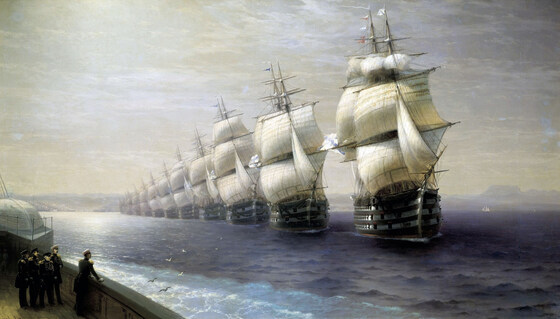
Submarines, Security, and Alliances
18:00 – 19:30
On 16 September the leaders of Australia, the United Kingdom, and the United States announced the creation of an enhanced trilateral security partnership called “AUKUS”.
Through AUKUS, the three governments reinforced their commitment to support each other’s security and defense interests; and as its first initiative the three leaders committed to support Australia in acquiring nuclear-powered submarines for the Royal Australian Navy.
In the minutes, hours and days that followed governments, the press and commentators from around the world have been reacting to this announcement, which some have characterised as the most important defence and security policy decision Australia has made in over 50 years.
Rarely – if ever - has an Australian policy decision received such global attention. France, whose contract to supply Australia non-nuclear-powered submarines was cancelled, has reacted strongly and is rallying its European neighbours to its cause. China and other regional countries, such as Malaysia, have warned that the decision could create a new arms race in the Indo-Pacific. Commentators are making assessments of what this means for the United States’ posture in the Indo-Pacific; its relations with China; and its ability devote increasingly scarce diplomatic and military resources to other regions such as the Middle East and Europe.
During this Webinar, moderated by the new President of AIIA WA, Brendan Augustin, our distinguished panel will share their views on the rationale for this historic announcement and the possible ramifications for Australia, our region and the world.
This event will be online only. Registrations close on 28th of September at 4pm AWST, after which you will receive a follow-up email containing details of how to join the Zoom webinar. The webinar will open at 5:45:pm AWST. The presenation will begin at 6:00pm AWST (Perth time, UTC+8), 8:00pm AEST (UTC+10)
About the Speakers
Hugh White AO is Emeritus Professor of Strategic Studies at the Australian National University. His work focuses primarily on Australian strategic and defence policy, Asia-Pacific security issues, and global strategic affairs especially as they influence Australia and the Asia-Pacific. He has served as an intelligence analyst with the Office of National Assessments, as a journalist with the Sydney Morning Herald, as a senior adviser on the staffs of Defence Minister Kim Beazley and Prime Minister Bob Hawke, and as a senior official in the Department of Defence, where from 1995 to 2000 he was Deputy Secretary for Strategy and Intelligence, and as the first Director of the Australian Strategic Policy Institute (ASPI).
In the 1970s he studied philosophy at Melbourne and Oxford Universities. He was the principal author of Australia’s 2000 Defence White Paper. His major publications include Power Shift: Australia’s future between Washington and Beijing, [2010], The China Choice: Why America should share power, [2012], Without America: Australia’s future in the New Asia [2017], and How to defend Australia [2019]
Susannah Patton is a Research Fellow in the Foreign Policy and Defence Program at the United States Studies Centre. She joined the United States Studies Centre from the Australian government, where she was until 2020 a Senior Analyst in the Southeast Asia Branch at the Office of National Intelligence, Australia’s peak intelligence assessment agency.
Susannah previously served in the ASEAN-Australia Special Summit Taskforce in the Department of the Prime Minister and Cabinet and as a diplomat in the Australian Embassy in Bangkok. Susannah holds first class honours degrees in law and political science from the Australian National University and speaks Thai.
Professor Peter J. Dean was appointed as UWA’s first Chair of Defence Studies and the inaugural director of the UWA Defence and Security Institute.
Prior to the commencement, Professor Dean was Pro Vice-Chancellor (Education) at the UWA. He is a Senior Fellow at the Perth USAsia Centre and a Visitng Fellow at the Strategic and Defence Studies Centre, The Australian National University.
Peter has an extensive background in military and defence studies. He has been a Fulbright Fellow and Endeavour Research Scholar in Australia-United States Alliance Studies as well as a non-resident fellow with the Centre for Strategic and International Studies (CSIS) and the Australia, New Zealand and Pacific Studies at Georgetown University in Washington D.C.
Before joining UWA, Peter was a scholar at the Strategic and Defence Studies Centre, in The Australian National University’s College of Asia and the Pacific where he held numerous research, teaching and leadership positions. Peter’s time at ANU included eight years teaching strategy, military operations, and Australian defence policy at the Australian Command and Staff College. He spent fourteen years as a member of the Australian Army (Reserve) with postings to infantry, commando, and training units.
Professor Dean was the founding editor of the Melbourne University Press Defence Studies Series, is a member of the Editorial Board of the Australian Army Journal, Global War Studies and the Military Studies Journal, and a former managing editor of the journal Security Challenges. He is a regular media commentator on Australian, United States, and regional defence issues. An international award winning author, his most recent book (with Brendan Taylor and Stephan Fruhling), is After American Primacy: Imagining the Future of Australia’s Defence, (Melbourne University Press, 2019).

Sep
23
2021
Past Event
Cybersecurity with Dr Mohiuddin Ahmed
The University Club of Western Australia
18:00 – 20:00
The internet was not designed with security in mind. People with malicious intent are taking full advantage of its openness to disrupt the activities of individuals, enterprises, and states. It is assumed that the cyber attack on the Australian Parliament House in March came from a state-based actor. There has also been a recent surge in cyber incidents in the healthcare sector. Cyber criminals understand that this sector is a vulnerable pressure point and hospitals hit by ransomware attacks have had to part with significant sums of money. Nation states have also paid millions in ransomware attacks in 2021 alone. With other forms of cybercrime, the stakes can be far higher. Cyber attacks on military hardware such as unmanned aerial vehicles, could have decisive impacts on military engagements. So clearly, cybersecurity has implications for international relations.
In this talk, Dr. Ahmed will focus on how easy it is to launch cyber attacks, Australia's stance on cyber security, and what individuals can do to ensure cyber safety.
About the Speaker
Dr. Mohiuddin Ahmed is currently working as Lecturer of Computing and Security in the School of Science at Edith Cowan University. Mohiuddin has been working in the areas of data analytics and cyber security, in particular false data injection attacks in Internet of Health Things (IoHT) and Internet of Flying Things (IoFT). His research projects are funded by different external agencies. He has edited books on data analytics, security analytics, blockchain, edge computing, enterprise security, and explainable artificial intelligence for cyber security. He has also engaged with media outlets such as newspaper, magazine, The Conversation etc. He is also an Association for Computing Macinery (ACM) Distinguished Speaker, Australian Computer Society Certified Professional, and a Senior Member of the Institute of Electrical and Electronics Engineers (IEEE).
Sep
10
2021
Past Event
Symposium on Taliban’s Return and the 20th Anniversary of 9/11
The University Club of Western Australia
08:30 – 15:30
This symposium will be presented by AIIA WA in partnership with the UWA's Centre for Muslim States and Societies and the UWA Public Policy Institute.
As we approach the twentieth anniversary of the terrorist attacks on the United States on 9/11, the Taliban have returned to power in Afghanistan while the United States has withdrawn from the country in an astonishing reversal of its foreign policy.
What do these developments mean for the future of Afghanistan, regional and global stability, the Global War on Terror, the rights of women and minorities, and refugees from Afghanistan? What policy options are available to the Australian Government both domestically and internationally under these circumstances?
The symposium is designed to address these questions across three sessions focusing on:
the current situation and future of Afghanistan
regional implications and perspectives; and
policy options for Australia and the West.
Tickets can be purchased at EVENTBRITE $60 Standard, $25 for students, and include morning tea, lunch, and afternoon tea.
Confirmed speakers include:
Adjunct Professor Amin Saikal
The University of Western Australia
Professor Samina Yasmeen
The University of Western Australia
Professor Shamit Saggar
The University of Western Australia Public Policy Institute
Professor Sam Makinda
Murdoch University
Rabia Siddique
Lawyer and Speaker
Dr Zafar Iqbal Yousafzai
Senior Research Associate at Strategic Vision Institute
Dr Mark Briskey
Murdoch University
Dr Jamal Barnes
Edith Cowan University
Dr Leila Ben Mcharek
Independent Researcher
Aug
26
2021
Past Event
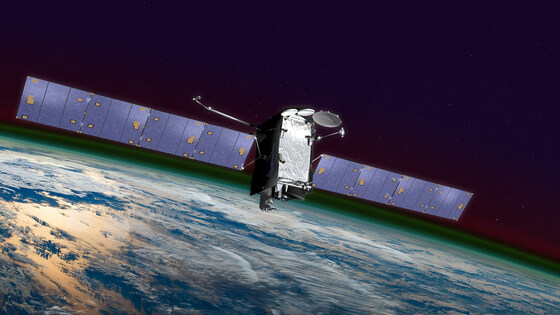
Space law, good governance, and advancing our space strategy
The University Club of Western Australia
18:00 – 20:00
Our August Event will be presented in partnership with the International Space Centre
Innovative technological advances, new space actors, and ambitious strategies have drawn increasing attention to space and space-related activities. In Australia, focus has been sharpened further with the establishment of the Australian Space Agency and publication of the Australian Civil Space Strategy 2019-2028. Effective space governance is critical if we are to achieve our strategic goals and advance space-related activities in secure, safe, and sustainable ways. Australia has reformed its domestic space legislation, and other nations have also adopted laws that support their national agenda, but more harmonised approaches are needed to avoid potential risks and conflicts. International law has a potential role to play, yet the five international space treaties were adopted decades ago, and have since been supplemented with soft law and transnational arrangements. Furthermore, governance gaps remain as we seek to engage in commercial activities in space and consider possibilities such as living and working in space. At our August event, Erika Techera will discuss the space law and governance landscape, highlight national legislative and strategic developments, and explore some areas for future development.
About the Speaker
Dr Erika Techera is a Professor of Law at Universtity of Westerm Australia (UWA). She is an international and comparative environmental lawyer with particular expertise in the Indo-Pacific region.
Her research explores legal frameworks to support blue economy goals, including issues at the interface of science, technology and law. Relevantly, her research projects include the uses of satellite data to enhance monitoring and enforcement of environmental law. She teaches postgraduate subjects in International Environmental Law, Oceans Governance, and Space & Satellite Law. Erika is a member of the interim advisory board for the International Space Centre at UWA. She is Australia's National Focal Point for the Indian Ocean Rim Association (IORA) Academic Group (IORAG), and has also been appointed to the Heritage Council of WA and the Australian Institute of Marine Science (AIMS) Council. Erika is a former barrister, and an elected Fellow and Director of the Australian Academy of Law.
Jul
29
2021
Past Event
Book Launch: Environmental Anarchy? Security in the 21 st Century by Mark Beeson
Murdoch Lecture Theatre
18:00 – 20:00
With an introduction by the The Hon. Professor Stephen Smith
Some of the most influential ideas about national and even global security reflect untenable, anachronistic strategic views that are simply no longer appropriate for contemporary international circumstances. At a time when climate change poses an existential threat to the continuation of life itself, there is an urgent need to rethink security priorities while we still can.
This presentation draws on Mark Beeson’s new book to provide an explanation of the failures and dangers of the conventional strategic wisdom, and outlines the case for a new approach that takes issues like environmental and human security much more seriously.
About the speaker
Mark Beeson is Professor of International Politics at the University of Western Australia, and the former Research Chair of the AIIA. Before joining UWA, he taught at Murdoch, Griffith, Queensland, York (UK) and Birmingham, where he was also head of department. He has also had visiting positions in the UK, France, Germany, China, Russia, Austria, and Hong Kong. His work is centred on the politics, economics and security of the broadly conceived Indo-Pacific region.
Jun
24
2021
Past Event
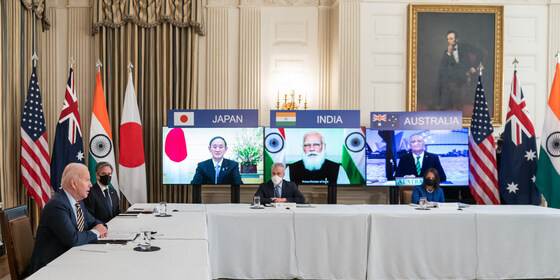
The Return of Democratic Alliances with Professor Benjamin Reilly
The University Club of Western Australia
18:00 – 20:00
A commitment to democratic values is becoming a new organising principle in international affairs. Major military (eg NATO), economic (eg OECD) and security (eg the Quad) groupings are increasingly promoted as alliances of liberal democracies, over and above their original core purpose. The Biden administration is planning a “Summit of Democracy” as it seeks to rebuild faith in the US-led order and its global alliances, while the UK has proposed expanding the G7 into a “D (democratic) 10”. The Australian government is a vocal supporter of this trend, arguing that the world is “increasingly polarised between autocracies and liberal democracies” and advocating “a world order that favours freedom”. This AIIA presentation will examine this new framing of the international order, and its consequences for Australia’s relationships in the Indo-Pacific region. Does this new rhetoric suggest a shift in Australia’s traditionally “realist internationalist” foreign policy towards a more “liberal internationalist” model, where we will actively seek to promote democracy and the values of liberalism globally?
About the speaker:
Professor Benjamin Reilly is a Professor of Political Science and International Relations at the University of Western Australia.
He was formerly Dean of the Sir Walter Murdoch School at Murdoch University, and head of the Policy and Governance Program and Director of the Centre for Democratic Institutions at the Australian National University (ANU). He has also worked with the Australian government, the United Nations and other international organisations, and held visiting appointments at Harvard, Oxford, and Johns Hopkins universities. He has authored or edited seven books and over 100 scholarly papers, and received financial support from the Carnegie Corporation of New York, the United States Institute of Peace, the East-West Centre, the National Endowment for Democracy and the Australian Research Council. He holds a PhD in Political Science from the ANU.
Jun
23
2021
Past Event
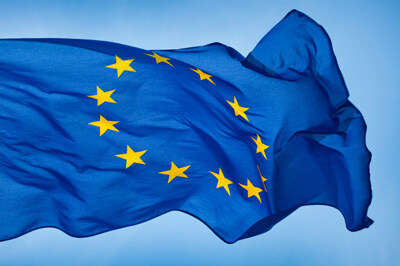
The European Union’s Strategy for Cooperation in the Indo-Pacific: AIIA WA/EU Delegation Breakfast Discussion
The University Club of Western Australia
09:00 – 11:30
In joint partnership with the Delegation of the European Union to Australia and the EU Consular Group in WA, AIIA WA invites you to join us for a breakfast discussion on the European Union’s Strategy for Cooperation in the Indo-Pacific.
The Indo-Pacific region stretching from East Africa to the Pacific Island States is a geographical reality and a strategic space. It is becoming the world’s centre of gravity, both in geo-economic and geo-political terms. It is an incredibly dynamic region that contributes 60% of global GDP and two-thirds of global growth. But its stability is increasingly challenged: maritime and territorial disputes, internal crises and conflicts, and geo-political competition are intensifying.
The European Union and its Member States have significant stakes here: they are the top investor and development assistance provider and one of the region's biggest trading partners. What happens in the Indo-Pacific has global ramifications and impacts directly on the European Union’s prosperity and broader security.
For this reason the Council of the European Union recently adopted a new Strategy for Cooperation in the Indo-Pacific. Its goal is to work with all its partners in the region to respond to emerging dynamics and challenges. As like-minded partners, the already solid cooperation between the European Union and Australia is set to be further enhanced.
This free event and breakfast is kindly sponsored by the EU Consular Group in WA and the EU Delegation to Australia.
About the speakers:
Mr. Fabio Spadi is Counsellor and Deputy Head of Mission, EU Delegation to Australia, since September 2017. From 2013 to August 2017, he worked at the European External Action Service HQ at the Desk for the Democratic People’s Republic of Korea, in the Japan, Korea, Australia, New Zealand, Pacific Division.
From 2006 to 2013 he was based at the General Secretariat of the Council of the EU (then EEAS) as Analyst for the Western Balkans/CIS region (South Caucasus) in the Analysis Division of the EU Intelligence Analysis Centre (EU INTCEN).
From 2002 to 2006 he worked for the Enterprise and Industry Directorate-General, European Commission.
He holds a Ph.D. in International Law from Scuola Superiore S. Anna, Pisa, Italy, a Master of Law (LL.M.) from the University of Cambridge, UK and a Laurea (MA) in Political Science from the University of Pisa, Italy.
The Hon. Professor Stephen Smith has been a Professor of Public International Law at the University of Western Australia since 2014. He is currently the Chairman of archTIS, Chairman of Sapien Cyber, Chair of the Advisory Board of the UWA Public Policy Institute, a member of the Board of the Perth USAsia Centre and a Member of the Board of the LNG Marine Fuel Institute.
Professor Smith was Federal Member for Perth for the Australian Labor Party from March 1993 until September 2013. In a distinguished career spanning 20 years in the Australian Federal Parliament, Professor Smith served as the Minister for Defence, and prior to that, as Minister for Foreign Affairs and Minister for Trade.
Following his retirement from the Australian Parliament in 2013, Professor Smith was a member of the EY (Ernst and Young) Oceania Government and Public Sector Advisory Board (2014 - 2017), Chair of the Asia Desk and a member of the Advisory Board of Perth Law firm Lavan (2014 – 2017), and a member of the Board of Hockey Australia (2013 - 2016).
Professor Smith completed his Bachelor of Arts and Bachelor of Laws at the University of Western Australia, and has practised as a Barrister and Solicitor in Perth. He completed a Master of Laws in Public International Law at London University, and subsequently lectured and tutored in Law in London.
Professor Mark Beeson is a Professor of International Politics at the University of Western Australia and the AIIA National Research Chair. He is co-editor of AJIA’s flagship publication, Navigating the New International Disorder: Australia in World Affairs 2011-2015. He was the founding editor of Critical Studies of the Asia Pacific.
Before joining UWA, he taught at Murdoch, Griffith, Queensland, York (UK) and Birmingham, where he was also head of department. He has also had visiting positions in the UK, Austria, France, Germany, Russia, China and Hong Kong. His key research interests are international relations; international political economy; Australian foreign policy; regionalism; politics, security and economics in the Asia-Pacific.

Jun
17
2021
Past Event
Italy and Australia: a winning partnership for the future. A Discussion with the Ambassador of Italy to Australia.
Italo-Australian Welfare & Cultural Centre
18:30 – 20:30
Event Capacity Increased! More tickets made available due to popular demand.
The COVID-19 pandemic is posing many challenges to international relations and can be regarded as a stimulus to rethink the approach to the main issues affecting the life of every citizen, from healthcare, to environmental protection, the fight against climate change, and international trade.
The rebirth after the mourning and damages caused by the pandemic is an extraordinary opportunity to effectively work for the future of our societies.
The Ambassador of Italy to the Commonwealth of Australia, H.E. Francesca Tardioli, on her first official visit to Western Australia, will draw a picture of the Italian rebirth and will share the priorities of the Italian G20 Chairmanship as well as the COP26 co-Chairmanship. Her Excellency will also reflect on the extent of the Italo-Australian partnership and the opportunities offered by Western Australia to further strengthen relations between the two countries.
Light catering will be provided. This free event is proudly sponsored by the Consulate of Italy in Perth and the Italo-Australian Welfare and Cultural Centre.
About the speaker:
H.E. Francesca Tardioli is an Italian senior career diplomat and has held the position of Ambassador of Italy to Australia since September 2019.
Her Excellency is fluent in English and French, has a good knowledge of Spanish and German, and a basic knowledge of Arabic. She was awarded a Knight of the Order of Merit to the Republic of Italy in 2002 and an Officer of the Order of Merit to the Republic of Italy in 2014.
Her Excellency joined the Italian National Diplomatic Service in 1991 and was assigned to the Directorate General for Migration and Social Affairs, as part of the Schengen Agreement Desk. She has served in Albania (1992-1995), Germany (1995-1998), Saudi Arabia (1998-2000), Italy (2000-2004), Belgium (2004-2008; 2010-2016) and Libya (2008-2010).
From August 2016 to August 2019, Her Excellency held the position of Deputy Political Director and Principal Director for the United Nations and Human Rights at the Italian Ministry of Foreign Affairs and International Cooperation.
Jun
08
2021
Past Event
Oceans: International Cooperation on Conservation
DoubleTree by Hilton Perth Waterfront
18:00 – 19:30
Event Format:
5:45: Registration Opens
6:00: Opening Remarks
6:15: Panel Discussion and Q&A
7:30: Complimentary Drinks and Canapes
Speakers:
Consul General David J. Gainer: US Consulate General, Perth
Dr Tony Worby: Chief Executive Officer - Flourishing Oceans, Minderoo Foundation
Dr Marji Puotinen: Spatial – Ecological Data Scientist, Australian Institute of Marine Science
Prof Jessica Meeuwig: Professor & Director, Marine Futures Lab, The University of Western Australia
Event Brief:
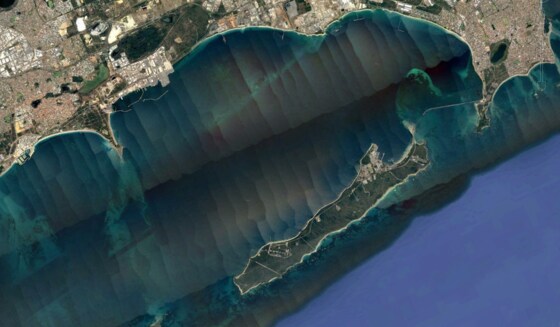
Oceans are a crucial part of the Earth’s ecosystem. They cover more than 90% of the planet’s surface and create more oxygen than its trees. But they are under threat from pollution and global warming.
This event will focus on international cooperation on conservation of the world’s oceans. It will be a panel discussion with several speakers from diverse backgrounds, followed by Q&A. The topics to be discussed will include the current state of the marine environment, what is currently being accomplished in relation to conservation both by governments and NGOs, and a perspective from the US Biden administration.
Through this event the AIIA hopes to raise awareness and develop an understanding of the many factors that influence the health of our oceans and what more can be done to conserve it.
The event will be run by the Young Professionals Network of AIIA WA and, while it is aimed towards students and young professionals, all are welcome.
May
27
2021
Past Event
The UWA Defence and Security Program with Professor Peter Dean
The University Club of Western Australia
18:00 – 20:00
*This event has now sold out*
Western Australia is now on the frontline of Australia’s defence. We sit at the crossroads of the Indo-Pacific strategic system that is the centre of strategic and economic competition this century. In March, The University of Western Australia launched the Defence and Security Institute which aims to be a world leader in key aspects of defence science as well as Indo-Pacific defence and security policy and issues.
At our May event, Professor Peter Dean, the director of the Defence and Security Institute, will join us to discuss Western Australia, National Defence, and Force Posture.
About the Speaker
Professor Peter J. Dean was appointed as UWA’s first Chair of Defence Studies and the inaugural director of the UWA Defence and Security Institute.
Prior to the commencement, Professor Dean was Pro Vice-Chancellor (Education) at the UWA. He is a Senior Fellow at the Perth USAsia Centre and a Visitng Fellow at the Strategic and Defence Studies Centre, The Australian National University.
Peter has an extensive background in military and defence studies. He has been a Fulbright Fellow and Endeavour Research Scholar in Australia-United States Alliance Studies as well as a non-resident fellow with the Centre for Strategic and International Studies (CSIS) and the Australia, New Zealand and Pacific Studies at Georgetown University in Washington D.C.
Before joining UWA, Peter was a scholar at the Strategic and Defence Studies Centre, in The Australian National University’s College of Asia and the Pacific where he held numerous research, teaching and leadership positions. Peter’s time at ANU included eight years teaching strategy, military operations, and Australian defence policy at the Australian Command and Staff College. He spent fourteen years as a member of the Australian Army (Reserve) with postings to infantry, commando, and training units.
Professor Dean was the founding editor of the Melbourne University Press Defence Studies Series, is a member of the Editorial Board of the Australian Army Journal, Global War Studies and the Military Studies Journal, and a former managing editor of the journal Security Challenges. He is a regular media commentator on Australian, United States, and regional defence issues. An international award winning author, his most recent book (with Brendan Taylor and Stephan Fruhling), is After American Primacy: Imagining the Future of Australia’s Defence, (Melbourne University Press, 2019).
May
05
2021
Past Event
Britain’s Place in the World. A Discussion with the High Commissioner of the United Kingdom to Australia
The London Room at the George
18:00 – 19:30
Now is an exciting time in Britain and Australia’s modern relationship. Australia was the first country that the UK Foreign Secretary visited following Brexit last January and the UK-Australia Free Trade Agreement (FTA) is one of the UKs top priorities. FTA negotiations are progressing well and after four rounds of talks, a six week ‘sprint’ has just commenced.
In 2021 the UK holds the G7 Presidency and will host the summit in Cornwall in June. Australia has been invited to join the summit as a guest, demonstrating the importance of this relationship. Additionally, the 2021 United Nations Climate Change Conference (COP26) will be held in Glasgow this November under the presidency of the UK, together with Italy.
In the words of the High Commissioner of the United Kingdom to Australia, Her Excellency Vicki Treadell CMG MVO,
“If we look at the world in the new global reality, where the poles of economic and political power are shifting and being redefined, the Asia Pacific region will be a critical centre of economic gravity for this century. So ensuring regional stability and security, respect for an international rules based system and shared universal values, is vital if the economic prosperity that this region promises can be fully realised. Britain’s relationship with Australia has never been more important as we work together within this context. Our relationship must be set in this modern context. In a fast changing world we must hold onto our shared history and the values at the heart of it. We must celebrate our people to people links and further deepen our trade and investment relationship too. We have strong foundations on which to build. We place trust at the heart of our relationship with Australia, a relationship that matters, one that holds true value and mutual benefit as our nations advance in the 21st century.”
There are many aspects of the UK’s renewed international outlook of significance to Australians. Join us with the High Commissioner of the United Kingdom to Australia to discuss the modern British-Australian relationship.
About the speaker
Her Excellency Vicki Treadell CMG, MVO took up her appointment as British High Commissioner to Australia on 13 March 2019. As High Commissioner, she is the UK government’s representative in a Commonwealth nation and works to advance and maintain the relationship between the UK and Australia.
The High Commissioner has held senior roles in the Foreign, Commonwealth & Development Office since she began her Foreign Service career in 1979. Most recently, she served as the British High Commissioner to Malaysia (2014 to 2019) and New Zealand (2010 to 2014) and Deputy High Commissioner to India (2006 to 2010).
Additionally, Her Excellency was Director of UK Trade and Investment for the North West of England from 2002 to 2005 where she was responsible for driving trade and investment as a key pillar of regional and economic development.

Apr
29
2021
Past Event
Germany’s policy guidelines for the Indo-Pacific region with Dr Gabriele Maluga, Honorary Consul of the Federal Republic of Germany
The University Club of Western Australia
12:00 – 14:00
Due to the current COVID-19 restrictions in Western Australia, the University Club of Western Australia is closed until the weekend. This event has been postponed and the new date will be uploaded shortly.
--------
In September 2020, the German government published its Policy Guidelines for the Indo-Pacific. At this event, the Honorary Consul of the Federal Republic of Germany, Dr Gabriele Maluga, will discuss why the Indo-Pacific region is so important to Germany, the seven areas covered by Germany’s foreign policy in the Asia Pacific, and what this means for Australia’s relationship with Germany.
This is a members only event.
About The Speaker
As of 12 June 2019, Dr Gabriele Maluga holds the position of Honorary Consul for the Federal Republic of Germany in Perth for the State of Western Australia.
She is a founding Director and Company Secretary of Janssen + Maluga Legal, a German Australian law firm in Perth, Western Australia. She brings two decades’ experience successfully negotiating, litigating or mediating corporate matters on behalf of corporate claimants and defendants as well as representing individuals as victims of catastrophic accidents. Before founding her law firm she worked in project finance for major US and British law firms around the world. In addition, she is an accredited specialist for German criminal defence. Gabriele wrote her Doctor thesis in criminal law and criminal procedural law on the topic of undercover agents, with a specific focus on decisions of the European Court of Human Rights (ECHR).
Holding a practising certificate as a Rechtsanwältin (German Lawyer) as well as a solicitor in Western Australia, she advises under both German and Australian law. The main emphasis of her advisory work is on (international) catastrophic injury cases (cross-border cases Germany/Australia), (international) commercial law and German and EU criminal law.
Her corporate experience is based on her involvement as the Chief Executive Officer of an international stainless-steel trading company as well as holding different management positions in other commercial entities for over 20 years.
She was a long-standing elected member of the Executive Committee of the Union des Avocats Européens (U.A.E. – European Lawyers Association). From 2017 to 2019 Gabriele served as an elected Board Member of the Western Australian-German Business Association (WAGBA) in Perth.
Gabriele is the author and co-author of publications on various issues of Commercial, Criminal and European law.
